
Belongs within: Euechinoidea.
Contains: Holectypoida, Pygasteridae, Cassiduloida, Oligopygidae, Neolampadidae, Clypeasteroida, Disasteroida, Holasteroida, Asterostomatidae, Palaeostomatidae, Toxasteridae, Somaliasteridae, Hemiaster, Paleopneustidea, Micrasterina.
The Irregularia are a group of echinoids in which the ancestral pentaradial symmetry has been altered towards a bilateral symmetry with the anus moved towards or onto the adoral surface. Many live buried in sand or muddy substrates. In members of the clade Microstomata, the lantern is absent in adults and food is obtained by gathering organic particles contained in the sediment (by gathering with the tube feet and/or ingesting the sediment directly). The lantern and jaws are retained in the Eognathostomata.
Major subgroups of irregular echinoids include the Atelostomata, which possess a disjunct apical system and intercalary apical structure. The Spatangoida, heart urchins, are adapted for living in (often relatively deep) burrows and have the periproct located towards the posterior end of the test. Peripetalous fascioles are typically present in spatangoids excluding Toxasteridae, except in certain taxa in which they have been secondarily lost (Fischer 1966).
Echinoids: regularly irregular
Published 9 March 2019
In manufacturing, one of the most desired qualities is regularity. Success is achieved by ensuring that each unit matches the last, that its qualities remain predictable and reliable. In evolution, by contrast, the opposite is often true: embracing irregularity may allow a lineage to expand in directions not previously available. For evidence, just look at the success of the irregular echinoids.
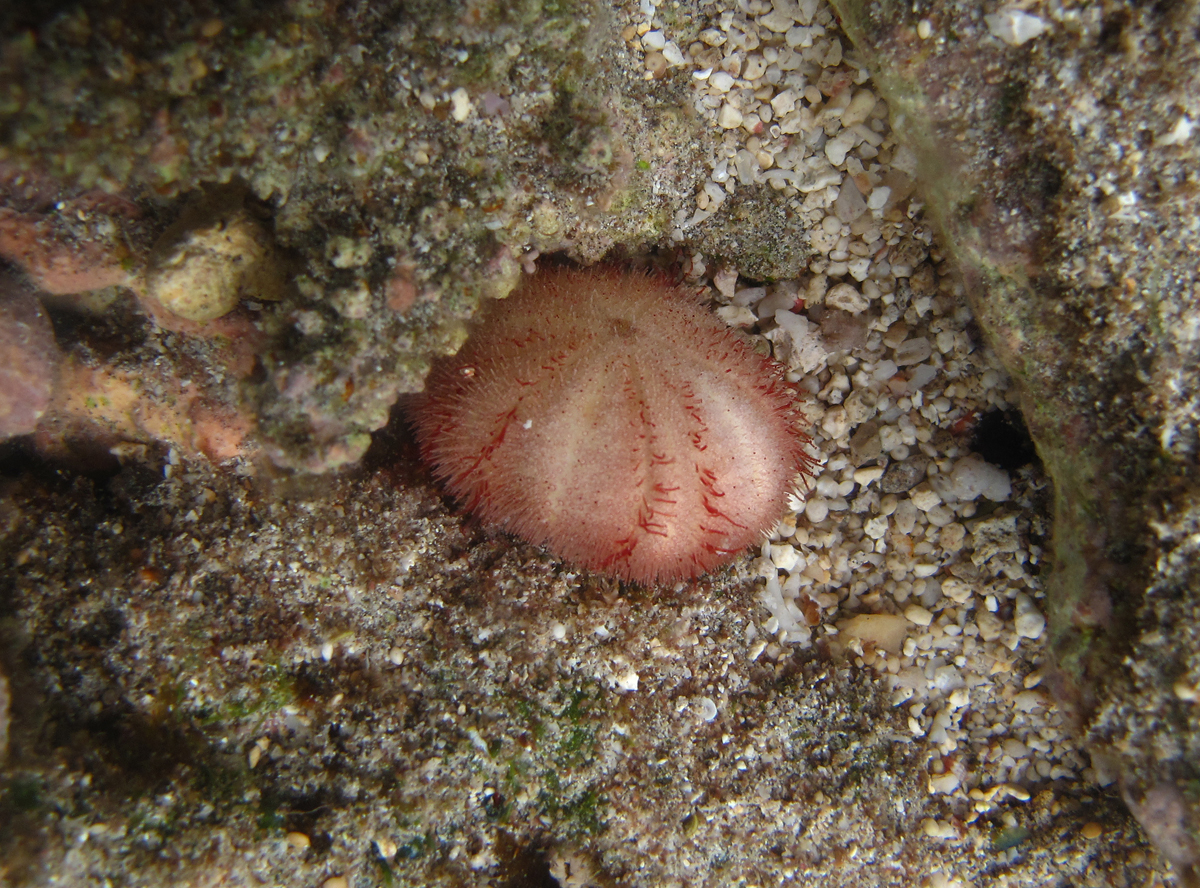

The Echinoidea, sea urchins, are commonly divided between regular and irregular forms. In regular echinoids, representing the ancestral type for the class, the mouth and anus are positioned at opposite points on the test. The mouth sits squarely in the centre of the animal’s underside (the oral surface) while the anus sits at the centre of the upper (aboral) surface. The five ambulacra, the lines of small plates in the test from which the tube feet emerge, are more or less evenly arranged around the superficially radially symmetrical test. Irregular echinoids, in contrast, have the anus more or less displaced from the midpoint of the test. In the earliest irregular echinoids, this displacement might be relatively slight: the periproct (the membrane through which the anus opens, usually covered in echinoids with an array of small plates) was still found at the centre of the aboral surface but was enlarged and/or stretched towards one end of the test (Saucède et al. 2007). In more derived forms, the periproct has moved more significantly, potentially being found on the side of the test or even on the oral surface near the mouth.
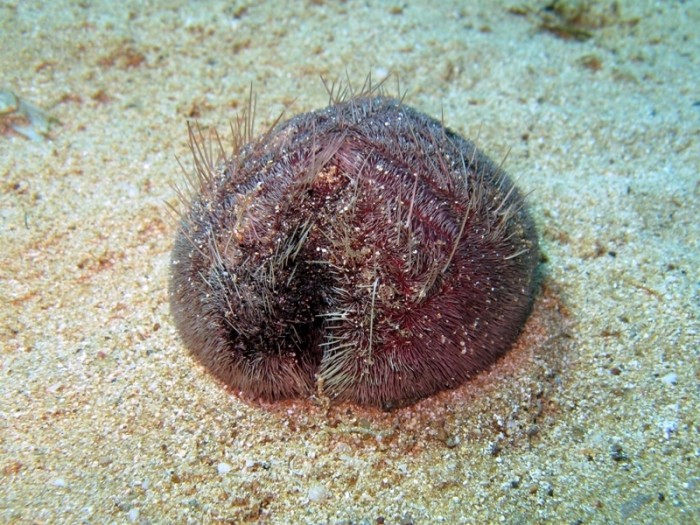
This displacement of the anus indicates a directionality to the test that isn’t found in regular echinoids. A number of other changes have associated it in the evolution of echinoids, such as reduction of the size of the spines covering the test and an increased directionality in their axes of movement. The mouth may also become displaced towards the front of the test, and the test as a whole may become more bilateral in its overall shape. The jaws become modified or, in a couple of groups, lost entirely. All these alterations add up to indicate a distinct change in lifestyle between regular and irregular echinoids. Whereas regular echinoids roam the surface of sea bottom, using their powerful jaws to graze directly on algae or scavenge on animal carcasses, irregular echinoids are deposit feeders that tend to live at least partially buried in the sidement. They may swallow large amounts of sediment and digest organic matter mixed therein, or gather up organic particles with their tube feet and/or by means of mucous strands transported in ciliary grooves. Burrowing is achieved by movement of the spines or by using the tube feet to pass sand grains above the aboral surface. In the shallow-burrowing heart urchin Spatangus purpureus, an array of longer spines on the aboral surface are used to keep a funnel open between the buried urchin and the surface, allowing water to carry oxygen to it. Echinocardium cordatum, which burrows as deep as 18 cm beneath the substrate surface, maintains an opening to the surface by means of elongate tube feet (Durham 1966).


The change in lifestyle was certainly a successful one: nearly 60% of living echinoids are irregular. The earliest irregular echinoids appeared in the early Jurassic, with recent analyses agreeing that they represent a monophyletic group (Saucède et al. 2007; Kroh & Smith 2010). Nevertheless, a certain degree of parallelism in adaptations appears to have been occurred. Living irregular echinoids can be divided between two clades: one is relictual, containing only two genera in the order Holectypoida, whereas the remaining species belong to the larger clade Microstomata. The earliest known members of the holectypoid lineage retained strong jaws even after they evolved the ability to burrow in sediment. In contrast, the earliest known member of the Microstomata retained large spines, indicating a non-burrowing lifestyle, but already possessed the adaptations for a particulate diet (Saucède et al. 2007). With time, both lineages developed the feature that they lacked, adding them together for a winning combination.
Systematics of Irregularia
<==IrregulariaSG93
    |--EognathostomataSG93
    |    |--HolectypoidaU78
    |    `--PygasteridaeSG93
    `--MicrostomataSG93
         |--MenopygidaeSG93
         |    |--Infraclypeus Gauthier 1875SG93, WD66b
         |    |    `--*I. thalebensis Gauthier 1875WD66b
         |    `--Menopygus Pomel 1883 [incl. Pyrinodia Pomel 1883, Pyrenodia (l. c.)]WD66b
         |         |--*M. nodoti (Cotteau 1859) [=Galeropygus nodoti]WD66b
         |         |--M. baugieri (Cotteau 1873)SG93
         |         `--‘Desorella’ guerangeri Cotteau 1862 [=*Pyrinodia guerangeri]WD66b
         |--Neognathostomata [Conoclyparia, Conoclypina]SG93
         |    |--CassiduloidaSG93
         |    |--OligopygidaeSG93
         |    |--NeolampadidaeSG93
         |    |--+--ClypeasteroidaSG93
         |    |  `--Togocyamus Oppenheim 1915M89
         |    |       |--*T. seefriedi (Oppenheim 1915) [=Echinocyamus (*Togocyamus) seefriedi]M89
         |    |       `--T. alloiteaui Roman & Gorodiski 1959SG93
         |    `--GaleropygidaeSG93
         |         |  i. s.: ‘Pygaster’ microstoma Lambert 1933J-S70
         |         |--Laticlypus giganteus Szőrény 1966SG93
         |         |--Hyboclypus Agassiz 1839 (see below for synonymy)K66
         |         |    |--*H. gibberulus Agassiz 1839K66
         |         |    `--H. caudatus Wright 1851 [=*Aulacopygus caudatus]K66
         |         `--Galeropygus Cotteau 1856 [=Galeopygus (l. c.); incl. Ressopygus Pomel 1883]K66
         |              |--*G. agariciformis (Wright 1851) [=Hyboclypus agariciformis]K66
         |              |--‘Clypeus’ constantini Cotteau 1873 [=*Ressopygus constantini]K66
         |              `--G. lacroixi Lambert 1925SG93
         `--AtelostomataSG93
              |--DisasteroidaSG93
              |--HolasteroidaSG93
              `--Spatangoida [Amphisternata, Hemiasterina]SG93
                   |  i. s.: Barnumia Cooke 1953Fi66
                   |           `--*B. browni Cooke 1953Fi66
                   |         Cestobrissus Lambert 1912Fi66
                   |           `--*C. lorioli Lambert 1912Fi66
                   |         Cottreaucorys Lambert 1920Fi66
                   |           `--*C. blayaci (Cotteau 1909) [=Homoeaster blayaci]Fi66
                   |         Enichaster de Loriol 1882Fi66
                   |           `--*E. oblongus de Loriol 1882Fi66
                   |         Gonzalezaster Sánchez Roig 1952Fi66
                   |           `--*G. lamberti (Sánchez Roig 1949) [=Nudobrissus lamberti]Fi66
                   |         Homoeopetalus Arnold & Clark 1934Fi66
                   |           `--*H. axiologus Arnold & Clark 1934Fi66
                   |         Niponaster Lambert 1920Fi66
                   |           `--*N. hokkaidensis Lambert 1920Fi66
                   |         Nudobrissus Lambert 1920 [=Dictyaster Stefanini 1908 non Wood-Mason & Alcock 1891]Fi66
                   |           `--*N. malatinus (Mazzetti 1885) [=Pericosmus malatinus, *Dictyaster malatinus]Fi66
                   |         Pusillaster Lambert 1920Fi66
                   |           `--*P. dallonii Lambert 1920Fi66
                   |         Royasendia Airaghi 1901Fi66
                   |           `--*R. canavarii Airaghi 1901Fi66
                   |         Amygdala Gray 1825 (n. d.)A66
                   |         Brissoides Leske 1778 (n. d.)A66
                   |         Cardiopatagus Pomel 1883 (n. d.)A66
                   |         ‘Cassis’ Parkinson 1811 (n. d.) non Scopoli 1777A66
                   |         Neopatagus Sánchez-Roig 1953 (n. d.)A66
                   |         Pleraster Quenstedt 1874 (n. d.)A66
                   |         Psephoaster lissosMM22
                   |         AsterostomatidaeFi66
                   |         PalaeostomatidaeFi66
                   |--ToxasteridaeSS05
                   `--+--AeropsidaeSS05
                      |    |  i. s.: Aceste Wyville Thomson 1877 [=Acestina Lambert & Thiéry 1924]Fi66
                      |    |           `--*A. bellidifera Wyville Thomson 1877 [=*Acestina bellidifera]Fi66
                      |    |--Homoeaster Pomel 1883SS05, Fi66
                      |    |    `--*H. tunetanus Pomel 1883Fi66
                      |    `--+--Coraster Cotteau 1886SS05, WD66a
                      |       |    `--*C. vilanovae Cotteau 1886WD66a
                      |       `--+--SphenasterSS05
                      |          `--Aeropsis Mortensen 1907SS05, Fi66 [=Aerope Jeffreys 1876 nec Leach 1813 nec Albers 1860Fi66]
                      |               `--*A. rostrata (Wyville Thomson 1877) [=*Aerope rostrata]Fi66
                      `--+--SomaliasteridaeSS05
                         `--HemiasteridaeSS05
                              |  i. s.: Cheopsia Fourtau 1908Fi66
                              |           `--*C. mortenseni Fourtau 1908Fi66
                              |         Crucibrissus Lambert 1920Fi66
                              |           `--*C. integer (de Loriol 1891) [=Macropneustes integer]Fi66
                              |         Distefanaster Checchia-Rispoli 1902Fi66
                              |           `--*D. garganicus Checchia-Rispoli 1902Fi66
                              |         Ditremaster Munier-Chalmas 1885Fi66
                              |           `--*D. nux (Desor 1853) [=Hemiaster nux]Fi66
                              |         Hernandezaster Sánchez Roig 1949Fi66
                              |           `--*H. hernandezi Sánchez Roig 1949Fi66
                              |         Heterolampas Cotteau 1862Fi66
                              |           `--*H. maresi Cotteau 1862Fi66
                              |         Holcopneustes Cotteau 1889Fi66
                              |           `--*H. gourdoni (Cotteau 1887) [=Trachyaster gourdoni]Fi66
                              |         Isopetalum Lambert 1911 [incl. Homoianthoides Lambert 1920]Fi66
                              |           `--*I. pseudoverticale Oppenheim 1900 [=Linthia pseudoverticale]Fi66
                              |         Opissaster Pomel 1883Fi66
                              |           `--*O. polygonalis Pomel 1883Fi66
                              |         Palhemiaster Lambert 1916Fi66
                              |           `--*P. peroni Lambert 1916Fi66
                              |         Vomeraster Lambert 1920Fi66
                              |           `--*V. verrucosus (Coquand 1862) [=Hemiaster verrucosus]Fi66
                              |         Washitaster Lambert 1927Fi66
                              |           |--*W. riovitsae (Adkins 1920) [=Hemiaster riovitsae]Fi66
                              |           |--W. barremicus Tanaka & Okubu 1954SG93
                              |           `--W. macroholcus Nisiyama 1950SG93
                              |         Hypsopatagus Pomel 1869 (see below for synonymy)Fi66
                              |           |--*H. (Hypsopatagus) meneghini (Desor 1858) (see below for synonymy)Fi66
                              |           `--H. (Leiopneustes Cotteau 1885) [incl. Stenopatagus Lambert 1911]Fi66
                              |                `--H. (*L.) antiquus (Agassiz 1847) [=Brissus antiquus]Fi66
                              |         Bolbaster Pomel 1869MM22
                              |           |--*B. prunella (Lamarck 1816) [=Spatangus prunella, Hemiaster (*Bolbaster) prunella]Fi66
                              |           |--B. madagascariensis Cottreau 1922GC94
                              |           `--B. subidus McNamara 1987MM22
                              |         Holanthus Lambert & Thiéry 1924F66
                              |           |--*H. hickmanni (Koehler 1914) [=Hemiaster hickmanni]F66
                              |           `--H. expergitusSS05
                              |--Hemiaster Fi66
                              `--+--Mecaster Pomel 1883SS05, F66
                                 |    `--*M. fourneli (Agassiz in Agassiz & Desor 1847) [=Hemiaster (*Mecaster) fourneli]F66
                                 `--+--Sarsiaster Mortensen 1950SS05, Fi66
                                    |    `--*S. griegii Mortensen 1950Fi66
                                    `--+--PaleopneustideaSS05
                                       `--MicrasterinaSS05

Irregularia incertae sedis:
  Desorella Cotteau 1855 (see below for synonymy)WD66b
    |--*D. elata (Desor 1847) [=Hyboclypus elatus, *Desoria elata]WD66b
    `--‘Dysaster’ semiglobosus Desory 1842 [=*Pachyclypus semiglobosus]WD66b
  Galeroclypeus Cotteau 1873WD66b
    `--*G. peroni Cotteau 1873WD66b
  Loriolella Fucini 1904 [incl. Pseudopygaster Hawkins 1922]WD66b
    |--*L. ludovici (Meneghini 1867) [=Cidaris ludovici]WD66b
    `--L. eos (Hawkins 1922) [=*Pseudopygaster eos]WD66b
  Eodiadema Duncan 1889Fe66 [EodiadematidaeSG93]
    |--*E. granulatum Wilson 1889Fe66
    |--E. bechei (Wright 1860)SG93
    `--E. pusillum Lambert 1990SG93
Desorella Cotteau 1855 [=Desoria Cotteau 1855 nec Nicolet 1841 nec Gray 1851; incl. Pachyclypus Desor 1858, Pachyclypeus (l. c.)]WD66b
Hyboclypus Agassiz 1839 [=Hyboclipus (l. c.), Hyboclybus (l. c.), Hyboclypeus (l. c.), Hybodyhus (l. c.); incl. Aulacopygus Pomel 1883]K66
Hypsopatagus Pomel 1869 [=Hypsospatangus Cotteau 1890; incl. Trachypneustes Munier-Chalmas 1891]Fi66
*Hypsopatagus (Hypsopatagus) meneghini (Desor 1858) [=Macropneustes meneghini, *Hypsospatangus meneghini]Fi66
*Type species of generic name indicated
References
[A66] Anon. 1966. Doubtful nominal genera of echinoids. In: Moore, R. C. (ed.) Treatise on Invertebrate Paleontology pt U. Echinodermata 3 vol. 2 pp. U633. The Geological Society of America, Inc., and The University of Kansas Press.
Durham, J. W. 1966. Echinoids—ecology and paleoecology. In: Moore, R. C. (ed.) Treatise on Invertebrate Paleontology pt U. Echinodermata 3 vol. 2 pp. U257–U265. The Geological Society of America, Inc., and The University of Kansas Press.
[Fe66] Fell, H. B. 1966. Diadematacea. In: Moore, R. C. (ed.) Treatise on Invertebrate Paleontology pt U. Echinodermata 3 vol. 1 pp. U340–U366a. The Geological Society of America, Inc., and The University of Kansas Press.
[Fi66] Fischer, A. G. 1966. Spatangoids. In: Moore, R. C. (ed.) Treatise on Invertebrate Paleontology pt U. Echinodermata 3 vol. 2 pp. U543–U628. The Geological Society of America, Inc., and The University of Kansas Press.
[GC94] Greyling, E. H., & M. R. Cooper. 1994. Little-known irregular echinoids from the Lower Cretaceous (Upper Albian) of Zululand. Durban Museum Novitates 19: 41–58.
[J-S70] Jesionek-Szymanska, W. 1970. On a new pygasterid (Echinoidea) from the Jurassic (Middle Lias) of Nevada, U.S.A. Acta Palaeontologica Polonica 15: 411–419.
[K66] Kier, P. M. 1966. Cassiduloids. In: Moore, R. C. (ed.) Treatise on Invertebrate Paleontology pt U. Echinodermata 3 vol. 2 pp. U492–U523. The Geological Society of America, Inc., and The University of Kansas Press.
Kroh, A., & A. B. Smith. 2010. The phylogeny and classification of post-Palaeozoic echinoids. Journal of Systematic Palaeontology 8 (2): 147–212.
[MM22] McNamara, K. J., & S. Martin. 2022. Middle Eocene echinoids from the western Eucla Basin, Western Australia. Records of the Western Australian Museum 37: 31–56.
[M89] Mooi, R. 1989. Living and fossil genera of the Clypeasteroida (Echinoidea: Echinodermata): an illustrated key and annotated checklist. Smithsonian Contributions to Zoology 488: 1–51.
Saucède, T., R. Mooi & B. David. 2007. Phylogeny and origin of Jurassic irregular echinoids (Echinodermata: Echinoidea). Geological Magazine 144 (2): 333–359.
[SG93] Simms, M. J., A. S. Gale, P. Gilliland, E. P. F. Rose & G. D. Sevastopulo. 1993. Echinodermata. In: Benton, M. J. (ed.) The Fossil Record 2 pp. 491–528. Chapman & Hall: London.
[SS05] Stockley, B., A. B. Smith, T. Littlewood, H. A. Lessios & J. A. Mackenzie-Dodds. 2005. Phylogenetic relationships of spatangoid sea urchins (Echinoidea): taxon sampling density and congruence between morphological and molecular estimates. Zoologica Scripta 34: 447–468.
[U78] Ubaghs, G. 1978. Classification of the echinoderms. In: Moore, R. C., & C. Teichert (eds) Treatise on Invertebrate Paleontology pt T. Echinodermata 2. Crinoidea vol. 1 p. T359–T367. The Geological Society of America, Inc.: Boulder (Colorado), and The University of Kansas: Lawrence (Kansas).
[WD66a] Wagner, C. D., & J. W. Durham. 1966a. Holasteroids. In: Moore, R. C. (ed.) Treatise on Invertebrate Paleontology pt U. Echinodermata 3 vol. 2 pp. U523–U543. The Geological Society of America, Inc., and The University of Kansas Press.
[WD66b] Wagner, C. D., & J. W. Durham. 1966b. Gnathostomata or Atelostomata. In: Moore, R. C. (ed.) Treatise on Invertebrate Paleontology pt U. Echinodermata 3 vol. 2 pp. U631–U632. The Geological Society of America, Inc., and The University of Kansas Press.